
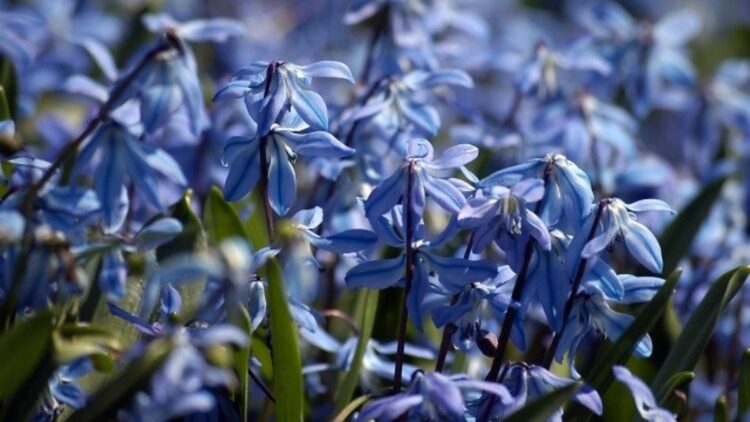
With the arrival of spring, gardens and parks across the northern United States and Canada begin to fill with colour, and allergic people begin to suffer. But among all the greenery, there’s one blue flower that’s raising more than a few eyebrows: Siberian squill. Yes, it’s pretty. Small, with an intense blue that catches anyone’s eye. But it’s also toxic, hard to eradicate, and, to make things worse, an invasive species that is throwing off the natural balance of many green spaces.
And that’s not all. It can poison dogs, cats, and even children if they play where it grows. Once it settles in, it’s extremely hard to remove. It has already started spreading across Ontario, and all signs point to it continuing to move south into the northeastern U.S. if no one steps in to stop it. Here’s everything you need to know to identify this dangerous plant and remove it from your yard as soon as you spot it.
What makes this plant dangerous?
Siberian squill comes from southwestern Russia, the Caucasus, and Turkey. It started being used as an ornamental plant because it blooms very early, resists the cold, and reproduces effortlessly. But those same three qualities are exactly what now make it so dangerous.
Its growth is fast and aggressive. Its seeds spread easily and can take over large areas in no time. The problem is, it has no natural predators here: no animals eat it, and even if you pull it out by the root, it usually comes back. It’s literally the plant that won’t give up.
The real risk: toxicity
Beyond the ecological damage it can cause to native flora, the most concerning thing is that the entire plant is toxic, leaves, flowers, seeds, and bulbs. If a dog or cat bites or swallows it, symptoms can include vomiting, diarrhoea, excessive drooling, or abdominal pain. In severe cases, you’ll need to rush to the vet.
And with small children, the risk is also real. If they’re playing in the yard and touch or ingest part of the plant, they could develop irritation or digestive issues.
Some veterinary clinics have already started warning people on social media to learn how to identify it and remove it from their gardens as soon as possible.
How to remove it without destroying your yard
Toronto and other cities have already issued basic recommendations to eliminate Siberian squill without harming the environment:
- Cut the flowers before seed pods appear.
- Dig up the bulbs completely. If you leave even a piece behind, it will grow back.
- Compact the soil well afterward. If it’s left loose, the plant will take advantage of it to settle back in.
- And please, don’t plant it even if you think it looks beautiful.
If you want something equally pretty but much safer, you can plant Virginia bluebells, Canada anemone, or trillium. They’re native, non-invasive, and pose no risk to children or pets.
How to recognize it
It blooms in April. It has electric blue flowers, with a darker stripe on each petal. They’re small, droop downward, and usually appear in clusters in damp or shaded areas.
The flowers are tiny and have a deep blue with a darker line running down the centre of their six petals. The petals are bell-shaped, and the flowers hang downward.
If you see something like that in your garden or nearby park, don’t ignore it. The sooner you act, the better.
Siberian squill is also resilient to most control methods you can think of. It may seem harmless, but it’s actually a serious problem: toxic, invasive, hard to remove, and damaging to the environment. And the worst part is that many people don’t even realize what they’re looking at.