
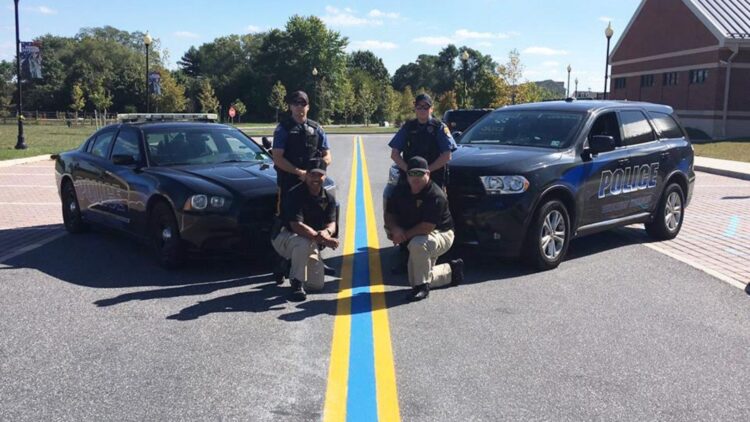
Have you heard about the new blue lines painted on some roads? Most of us know that the Federal Highway Administration rules exist so that every signal and mark on the U.S. roads is clear, safe, and the same in the entire country, right? Well, recently, some blue lines appeared on some roads and many drivers were confused. I mean, of course they would because they must have thought there were new traffic rules they didn’t know about and they didn’t know what they had to do.
So, let’s explain why these blue lines were painted and why they are not allowed on the U.S. roads.
The same marks on the roads
They are very important because they indicate to drivers where they must go and how to be safe. When someone drives from one state to another, he or she needs the marks to have the same meaning everywhere. Otherwise, they will be so confused and more accidents would happen.
In the U.S., the marks on the roads have followed national rules since many years ago. The first painted center line appeared in 1911 and, after that, the Manual on Union Traffic Control Devices (MUTCD) was created. This manual establishes the national rules for every signal, light, and mark on the road. Thanks to this, white and yellow lines always mean the same in the entire country.
Most of the states follow these rules very carefully, but in some places different colors showed up on the roads. These unusual colors were meant to be a support symbol, but they surprised many drivers.
Blue lines in New Jersey
A double yellow line on the center of the road normally separates the traffic that goes in opposite directions and shows that drivers mustn’t pass another vehicle in that location. According to the MUTCD, the space between the two yellow lines must remain empty, and the only exception is to use black paint if the road is very light and there’s not enough color contrast.
Despite this clear rule, some places in New Jersey painted a blue line between the yellow ones in front of a police station to show respect and support to officers who protect the community.
It’s true that this was a very beautiful gesture, but the blue line doesn’t follow the national standards.
Federal Highway Administration response
The U.S. has worked very hard to improve safety on the roads with new laws and regulations. This is why any change on road markings immediately shocks people. Of course, this blue line might seem like nothing for some people, but the Federal Highway Administration stated it isn’t allowed.
In an official letter, the agency explained that there are many ways to honor public service that are more accurate than changing road markings. It also warned about the danger this could mean for drivers, since confusing moments like that can lead to traffic accidents. What’s more, it said that the blue lines between the yellow ones don’t meet the MUTCD.
After the blue line, other parts of New Jersey painted lines in other colors: red for firefighters, and green for emergency medical service. None of them were approved by the federal government since they could also affect the regular traffic flow.
Basically
Uniform markings are essential so that every driver sees the same clear message, no matter where they are. The Federal Highway Administration made it clear that these colored lines are not allowed.
So, supporters of law enforcement, firefighters, and emergency medical workers should use other safe and appropriate ways to show their appreciation while keeping America’s roads consistent and safe.