
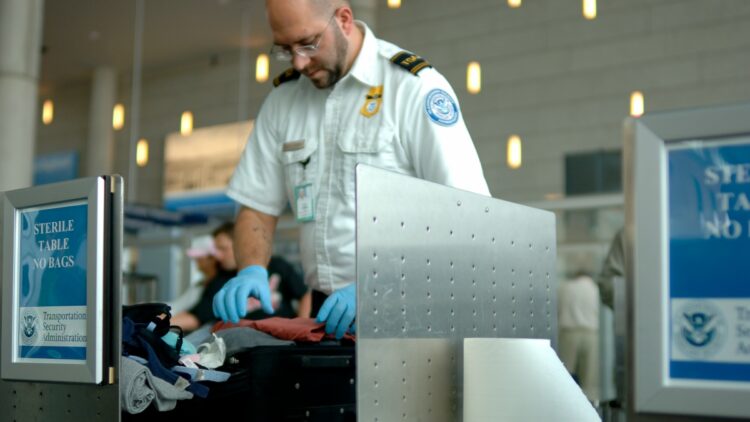
Packing is becoming more and more complicated. What can I bring? Can I bring liquids? What if I need to bring my laptop? Can I put it in the hold? If you are planning to travel soon, the TSA (Transportation Security Administration) has banned certain devices from being carried in checked luggage because they are a serious risk of fire. We are going to tell you everything we know about these new developments below so that packing your suitcase is not a very complicated task. But, for now, there is something you should know and that is that all your electronic devices that have lithium batteries will have to go in your carry-on luggage, they cannot go in the hold.
But, why?
An incident that occurred in 2010 highlighted the lack of safety regarding lithium batteries. Apparently, a Boeing 747 (UPS flight 6) was carrying a large number of batteries. This aircraft crashed after suffering a fire in the cargo hold. Why? Because the batteries had caught fire due to the change in pressure and had exploded. This obviously led the authorities to establish new regulations that would also adapt to the technologies in order to avoid tragedies similar to this one.
What items are prohibited in checked luggage?
As we just mentioned, there are certain products that are dangerous to transport at high pressures and that is why you will have to take them with you. We leave you a list with these devices:
- External batteries, such as power banks, spare batteries for cameras or computers, are totally prohibited in checked luggage, basically because lithium can suddenly heat up due to shocks or rapid changes in temperature, so, if you need to carry one of these, you will always have to carry it in your hand luggage (and if possible, inside a protective case).
Note that there are specific restrictions: batteries of up to 100 Wh can travel without prior notification, but if they exceed this voltage, approval from the airline will be required and only two can be carried per passenger.
- Mobile phones and tablets. Although they may seem harmless, it is important to remember that any device that has a battery can represent a danger (or have we not heard of the cases of the Samsung Galaxy Note 7 that has had to be withdrawn from the market due to spontaneous fires?). Since there is nothing safe about these devices, it is best to always carry them with you, so that if they overheat for any reason, the crew can intervene as quickly as possible to mitigate the possible effects.
It may seem like a small thing, but a typical flight usually carries around 200 passengers, and normally, each one carries their own mobile phone. If a few of them put their mobile phones in the hold, we would be talking about, how many? 25 or 50 devices without supervision, making it very difficult to intervene in time if one of these devices suffered a problem.
- Laptops: as with mobile phones, they have even larger batteries than those of a phone, which further increases the risk of fire.
In 2023, United Airlines experienced a fire caused by a laptop in a cabin, and, although the situation was resolved fairly quickly, the incident made it clear that great care must be taken and that these devices must be completely turned off during takeoff and landing.
- Electronic cigarettes are also prohibited, according to the Federal Aviation Administration (FAA) which considers that these devices could also overheat, so it requires deactivating the devices and removing the batteries during the flight to prevent them from being accidentally turned on (remember also that smoking is prohibited on airplanes).
- You also have to be careful with portable video game consoles and take them with you. But not with home ones. So, if you want to travel with your PlayStation 5, you can take it in the hold (because they don’t have internal batteries, they run on alternating current), but our most personal advice is to take it with you, as your luggage could get lost or stolen and you would lose your console.
If you have any doubts about what devices you can carry in your luggage, always check the rules of the airline you are travelling with to avoid unpleasant surprises and to avoid putting anyone in danger. Have a good trip!