
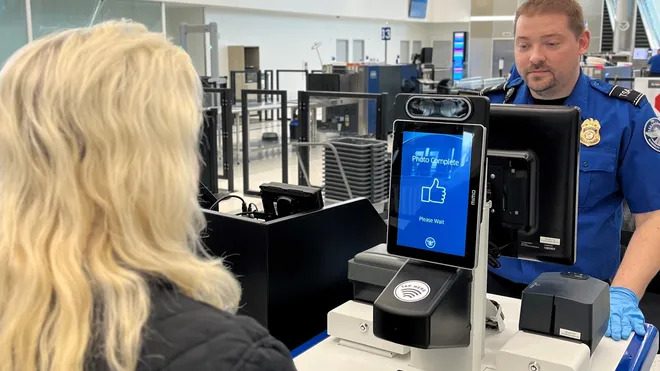
More than 250 airports in the United States are using facial recognition to identify passengers before they fly. The TSA promotes it as a tool that improves security and speeds up boarding… But not everyone is thrilled (as expected), and in fact, more and more travelers are complaining that although it’s supposed to be optional, in practice it feels mandatory and they’re afraid to refuse it.
And here’s where the problem starts, because what happens if you say you don’t want your face scanned? Do they make you wait longer? Do you risk missing your flight?
Is it optional? Technically yes. But…
There is a right to refuse the photo, yes. The problem is that almost no one knows about it, and many who try to exercise that right end up having a pretty unpleasant experience. But that’s why we’re here, to make sure your face doesn’t get scanned if you don’t want it to be.
The truth is, most passengers don’t get any clear notice that they can reject the scan! And those who do often end up in awkward situations… A traveler in Fort Lauderdale said that when he said he didn’t want the photo, the agent snapped back with a “there are already a thousand cameras in the airport” and? officer? I still don’t want you to scan my face!
Another one, in Las Vegas, said that just for refusing facial recognition he had to wait longer and go through a manual ID check, with the usual passive-aggressive comment like “if you had accepted the photo, you’d already be inside”… Not to sound like a conspiracy theorist, but… why are they so eager to scan our faces?
The technology works… but people don’t trust it
Alright, let’s look at the technical side, the TSA says the margin of error is very low, less than 1 %. Much more accurate than other biometric methods. Even so, more than 60 % of surveyed passengers say they’re concerned about what’s done with those images, or who might access them.
And what’s worse: some people don’t even dare to say no, for fear it’ll complicate their trip.
Congress has something to say too
Senator Jeff Merkley, from Oregon, has reintroduced a bill called the Traveler Privacy Protection Act. The idea is simple: anyone should be able to travel by showing just their ID, without needing to have their face scanned. And that right should be clearly explained at the airport, which isn’t the case right now!
“No government should have a database with the faces of everyone traveling within the country” said Merkley
Not everyone agrees
Several industry associations (like Airlines for America or the Security Industry Association) have defended the technology. They say that if facial recognition is banned, security will be affected and the TSA will need to hire more staff, which will make the system more expensive.
For them, removing it would be a step backward.
What’s going wrong?
Facial recognition itself isn’t the issue. What bothers people is being told it’s voluntary and then being treated poorly for saying no. That’s what raises red flags.
Passengers aren’t against the technology. What they’re asking for is transparency, real choices, and respectful treatment. And above all, for someone to explain how these scanners work and what happens with the stored images. If the system wants to move forward, it’ll have to ensure that saying no doesn’t come with consequences.
What now?
The United States is at a tricky point: either it moves forward with a tool that works but generates distrust, or it takes privacy seriously and redesigns how it’s implemented.
The decision won’t just affect airports. It will also set the tone for how our rights are managed in a world with more cameras and fewer explanations.
And in the meantime… yes, the cameras are already recording.