
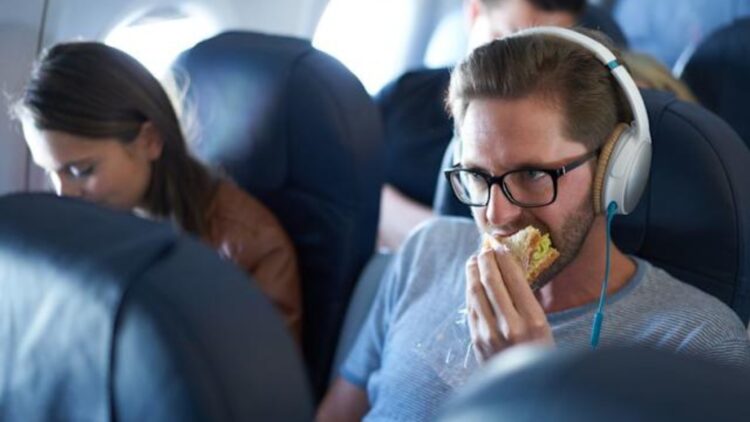
While the TSA allows travelers to bring certain foods on board—like canned tuna, pizza, and yogurt—airlines in the U.S. are dealing with an unexpected issue: the strong smells coming from these items. With new carry-on luggage regulations rolling out at airports, especially after recent changes from the European Union affecting transatlantic flights, the debate is heating up over what foods are okay to bring, and what’s better left at home.
There are many things that we can’t take on a plane, but food wise, here’s what you can pack, what you probably shouldn’t, and why a little common sense might matter more than the official rules. So, let’s see what the TSA says!
Snacks on the plane
Nowadays is ver common to see people bringing food to planes, especially on long-haul flights or those with layovers. It’s true the TSA (Transportation Security Administration) technically allows canned tuna in your hand luggage, opening it and eating it mid-flight. However, have you thought about the intense smell? and how others might feel about it? Imagine being in an airplane, which is not big, this smell is absolutely overwhelming and it gets worse as time passes.
This is why many airlines have received a lot of complaints from passengers explaining the horrible situations they have experienced because someone decided opening a tuna can at 35,000 feet was a good idea. They argue this makes them feel sick or annoyed. Either way, it is not the ideal situation you think you are going to experience when going on a plane, is it?
Is the TSA changing the rules?
Now, to be clear: the TSA doesn’t ban smelly foods like tuna, garlic-heavy dishes, or strong cheeses. But with these complaints, some airlines are starting to rethink their policies about what’s okay to eat in-flight, especially on longer routes where passengers are more sensitive to smells.
This conversation comes at a time when airports in the European Union have implemented new hand luggage rules for international flights, which also affect flights headed to or passing through the U.S. In this context, the TSA has reminded travelers what foods are allowed on board—and what needs special management.
These are the foods you can bring
According to the TSA, the following solid foods are good to go in your carry-on: Crackers, nuts, cereal, hard cheeses, pizza, sandwiches, solid chocolate, snacks, cooked meats, cooked vegetables (without liquid), seafood, candy, pies and cakes, coffee, protein powders, and dry pet food.
When it comes to liquids or semi-liquids—like yogurt, soups, jams, and sauces, they’re allowed only if they’re in containers of 3.4 oz or less, and must fit in your quart-size liquid bag.
There is a bit more space for baby food, breast milk, or formula, which can go above the liquid limit, but they do have to be screened by TSA officers at the checkpoint.
Being empathetic
Even though the TSA is not banning smelly foods, they are encouraging passengers to use common sense. Foods like tuna, garlic, and some cheeses may pass security, but that doesn’t mean they’ll go over well with your seatmate.
So what is the best thing to do? Of course, the solution is not to stop bringing food, what’s recommended is to go for mild, easy-to-eat foods that won’t make other passengers feel sick. Yes, you can pack that tuna with you, but maybe save it for after you land and enjoy it in a more comfortable place. So, what can we learn from this? Well, we can agree on the importance of treating others as you would like to be treated, who would like to spend hours and hours smelling strong smells?