
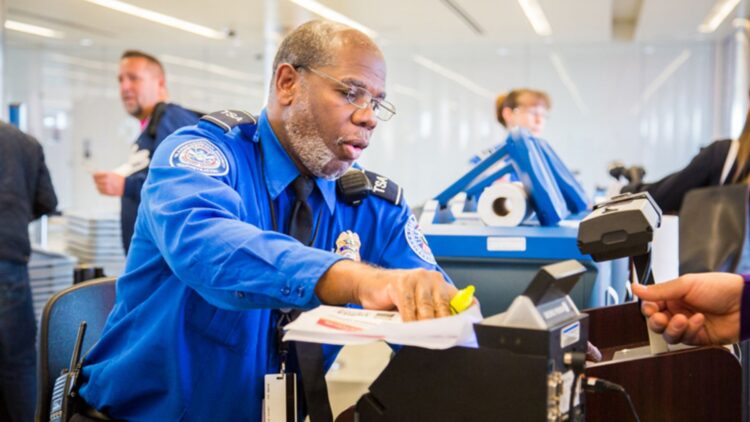
The Transportation Security Administration (TSA) has decided to update the identification rules for traveling in the United States, so domestic travellers will have to pay close attention because starting in May they will not allow mistakes and only certain documents will be accepted at airport security checkpoints.
First of all, you should know, obviously, that passengers must carry a valid and current identification before boarding any flight (whether domestic or international), and that those who do not present a suitable identification may face delays or even denial of boarding the flight. We don’t want that, do we? Stay tuned and find out everything you need to travel from now on within the national territory.
Valid IDs
- State-issued driver’s license or ID card (as long as it meets ID requirements, which we’ll discuss later)
- U.S. Passport (valid)
- U.S. Passport Card
- Green Card or Permanent Resident Card for those users who are not U.S. citizens but do have permission
- DHS Trusted Traveler Cards (Global Entry, NEXUS, SENTRI, FAST) used to facilitate border crossings
- U.S. Department of Defense ID (including IDs issued to dependents)
- Border Crossing Card (for those who travel frequently between the U.S. and Mexico)
- An acceptable photo ID issued by a federally recognized tribal nation/Indian tribe, including Enhanced Tribal Cards (ETCs).
- HSPD-12 PIV Card (from government agencies)
- Passport issued by a foreign government
- Canadian Provincial Driver’s License or Indian and Northern Affairs Canada Card
- Transportation Worker Identification Credential
- U.S. Citizenship and Immigration Services Employment Authorization Card (I-766)
- U.S. Merchant Mariner Credential
- Veterans Health Identification Card (VHIC)
It is important to remember that these documents must be shown at any airport checkpoint from the age of 18 in order to travel.
When will it be mandatory?
Starting May 7, 2025, coinciding with the mandatory Real ID, so, by that date, you must have already requested your Real ID, otherwise, it is very likely that you will not be able to access either a plane or government buildings.
How do I know if my license complies with the REAL ID?
Very easy, if your license has a gold star in the upper right corner, it is a REAL ID and you can use it, if it does not have one, you will need to update it or present another valid document (such as a passport, for example).
In case you doubt whether your identification complies or not, consult with the Department of Motor Vehicles (DMV) of your state to request one.
What if my identification is not valid or has expired?
In the event that your ID is not expired or forgotten, or you do not have one that has been approved by the TSA, TSA agents may ask you to undergo an additional identity verification process (basically collecting your information, such as name and address, to verify that it is you), and if your identity is verified, you will be allowed to enter the security checkpoint (but there may be additional checks), however, it does not guarantee that you will be able to board your flight.
On the other hand, the TSA makes it clear that it will not allow people to enter the security checkpoint if they choose not to provide acceptable information or refuse to cooperate in the identification process.
Do children need documentation?
The TSA does not require it when accompanied by an adult, but it may be subject to each airline.
I have a compound name and it does not appear on my boarding pass
Don’t worry, the TSA accepts variations in boarding pass suffixes, as it is not mandatory to include them on the boarding pass, if there is a suffix on the card and not on the ID, it will be considered an “acceptable” variation
Plan your trip in advance, and arrive early at the airport, avoiding as many setbacks as possible! Have a good trip!!