
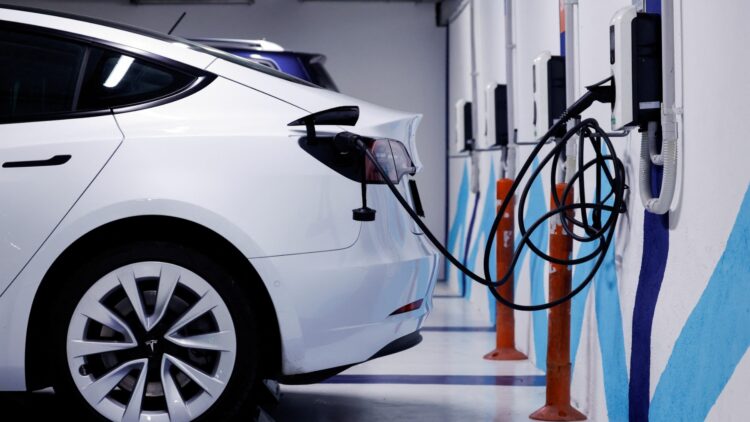
We need to incentivize the purchase of electric vehicles, and the United Kingdom is already on it! New subsidies are arriving, tax advantages and more support to build chargers throughout the country, but be careful because starting in 2028, electric vehicle owners will have to pay a tax per kilometer driven. Uh, we don’t like it as much anymore, right?
The future of mobility in the United Kingdom is changing (and in the rest of Europe too), we are going to tell you what is happening with the British!
We need to sell electric cars
The Government will offer 1.3 billion pounds extra to support the electric transition, bringing the total fund to almost 2 billion.
It will last until 2030, and it is a relief for brands, buyers and those who are installing chargers everywhere.
Subsidies guaranteed until 2030
Right now, electric cars up to £37,000 can get £3,750 of aid. So, for the moment, sales are going well.
Is the market doing well… for sure?
The United Kingdom was the number 1 electric market in Europe in 2024, with more than 382,000 registrations. It sounds spectacular to the world, but the reality is that for manufacturers it is not so much…
They have to meet extremely high ZEV quotas, 28% of electric sales in 2024 and 80% in 2030.
To reach that, many are using huge discounts that eliminate their profit margins, but the Government eased the rules a bit for 2025.
The per-kilometer tax arrives in 2028
And now, what is generating the most discussion is the new eVED, a tax for electric cars based on the miles you drive.
So, starting in 2028, EVs will pay 3 pence per mile, plug-in hybrids 1.5 pence per mile.
Why are they doing it? Very simple, when cars stop using gasoline, the Government will stop collecting fuel taxes… and they need to make money somehow to maintain the roads!
What the eVED will bring
- 1.1 billion in 2028/29
- 1.9 billion in 2030/31
And how much does it affect the user?
The approximate calculation will be about £276 extra per year for someone with an electric car, much less than a gasoline car today, but this change is very important for the economics of EVs.
More tax changes
There are more changes, and the fuel tax rises for the first time since 2010, and is coming in September 2026. It will be for gasoline and diesel (as we said, less gasoline means less money…).
On the other hand, there will be a 10-year tax relief for chargers and EV businesses, a small breath. There will also be 100% deductions until 2027 for zero-emission vehicles, heavy machinery and charging installations.
Changes in vehicle registration tax
Plug-in hybrids will get a break until 2028, and the “expensive car supplement” raises the limit to £50,000… but only if it is electric.
Charging stations
The Government wants to make it easier to install chargers on streets where homes do not have a garage or cannot connect to their electrical network, which will be key for the development of cities.
Review of public charging prices
Between the first and third quarter of 2026, rates will be reviewed to make them more competitive compared to traditional refueling and to adjust whether it can continue like this or changes are needed.
Many nuances
More subsidies, more chargers, more advantages for companies and a fiscal strategy that tries to balance the books without slowing down the ecological transition, which we need…
Even so, with the new per-kilometer tax they make it clear that the electric car of the future will not be “free to maintain”, there will be aid but new rules, as it should be, right?