
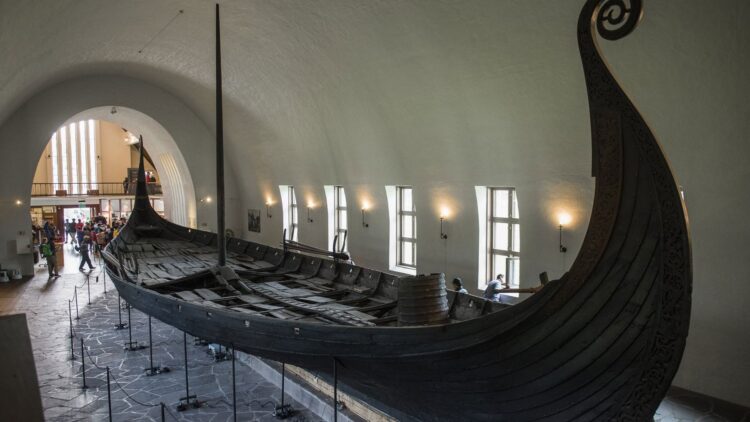
The story of the Vikings has always fascinated us, and the truth is, we know very little about them. For more than 200 years, archaeologists and experts believed that a series of shipwrecks in the Baltic Sea near Sweden belonged to the Viking era… But the shapes of the hulls, their location, and some details led to incorrect conclusions. And guess what? They’ve now been disproven.
The Vrak Museum in Stockholm has launched a study that revealed these ships were not Viking at all, but much more recent than we thought. Thanks to 3D surveying technologies and dendrochronological analysis, it has been confirmed that at least four of the five sunken ships were built between the 17th and 18th centuries. That is, during the transition from the Middle Ages! Want to know what else this study says?
From Viking technique to Mediterranean innovation
Ok, but, take care that this research technique was based (at first sight) purely on observing the remains they found, mainly focusing on how the ships were built. Don’t get impatient, we’ll explain it clearly!
Apparently, a major construction difference was the clue for them: the Vikings used some different techniques when building boats, in this case, they a “clinker” style (it is like overlapping planks) rather than placing them side by side to form a smooth surface, like the ones found in these ships (and common used in other cultures).
Of course, that’s what stood out most, because these techniques originated in the Mediterranean during the 7th century and spread across Europe with the rise of naval artillery. The same thing happened with hull reinforcement, the most powerful and important weapon at sea!
So what?
Well, this change represented a huge naval revolution, this suggest that the Scandinavians did not have their own technologies (or at least not at this level nor this moment of History) and that they just adopted foreign ones much earlier than what we thought! Isn’t it incredible?!
Of the four ships analysed, they date from the 17th and 18th centuries, and one of them may be the oldest ever found in northern Europe using this technique.
The mistake that changed the story
Those ships were found about 20 kilometres off the Swedish coast, and their preservation was exceptional, even if we think it is complicated (lots of years have passed but they are like freshly made! Some masts were still standing, and allowed researchers for a detailed study of their structure, they were a reminder of what once sailed the North Sea!
Now, with this evidence on the table, a historical revision is coming, they are not Viking ships, so a revision of the history is needed here!
The Vrak Museum and its role
The Vrak Shipwreck Museum, dedicated exclusively to underwater archaeology, has led this research and is now seeking funding to excavate and better preserve the remains. The goal is to display at least one of these ships in the future, something that would be both historic and amazing.
Redrawing the past
One of the researchers’ main tasks is to correct the past (even if it’s incredibly difficult), but now we have a new idea: how we interpret the remains we find.
The original idea was incredible, a Viking shipwreck found near the coast, but now the story is even more interesting: the technical and cultural evolution of Nordic peoples after the Middle Ages.
The myth is dismantled, but the story remains strong. What else will they end up discovering about these ships?