
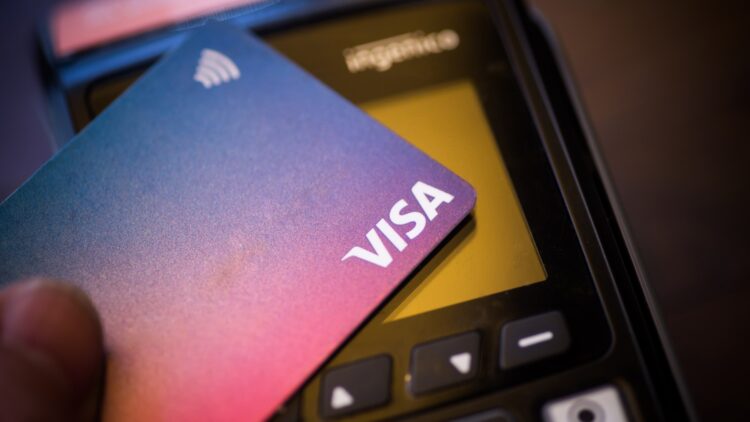
Credit cards have become practically an extension of ourselves, and since the COVID-19 Pandemic arrived, they have become an essential tool in our daily lives and we hardly see payment with coins anymore. However, starting this January 2025, there is news that many people are not going to like. Merchants who accept VISA cards are going to face a new challenge, and that is that the fees for their use could increase, so that the prices paid by consumers would also end up rising to alleviate this effect.
This change comes at a time when small businesses are already grappling with tight margins, and lawmakers are already looking at how to improve competition in a market dominated by Visa and Mastercard. So, if you’ve ever wondered how fees impact the day-to-day life of merchants, we’re going to answer that question below by explaining how it will affect payments from now on.
What is the increase announcement?
The notice was issued on October 10th through the processor Global Payments, and it specified three types of new adjustments:
- The first, called “Improper Use Fee”, which will be applied when a transaction is authorized but not settled within a certain period, in this case, it will increase from 9 cents to 15 for each transaction that is made.
- The so-called Free Transmission Fee, which is paid by financial institutions. This will rise from 18 to 25 cents for each transaction.
- Finally, the Digital Commerce Service Fee in the USA, which will be based on the transactions made (instead of settlement and clearing).
Remember that these changes will be established only for merchants, but, most likely, with this price increase, the changes will also end up being reflected in the products that consumers buy.
Why are Visa fees going up?
Visa, and its main competitor MasterCard, are facing scrutiny from the U.S. Senate. Lawmakers from both parties have called the current fees a burden (especially for small businesses). The debate has particularly focused on interchange fees (which typically range between 1% and 3% of each transaction). While it is true that those fees have not increased since 2017 according to the Electronic Payments Coalition, this has continued to generate pressure on merchants.
On the part of the legislators, they continue to evaluate the Credit Card Competition Act, which seeks to force networks to allow an additional processing option to Visa and MasterCard. With this change, much more competition could be encouraged and these inconvenient costs for merchants could be reduced.
How and who will these changes affect?
First, the impact on merchants is immediate. For businesses that process these Visa card payments, the higher fees could reduce their profit margins, especially for businesses with a high volume of low-value transactions.
Let’s take as an example a local coffee shop that sells mid-priced products (for example, a coffee at $2.50). With the processing fee, for each transaction, the fee could go from $0.05 to $0.08. While this may seem like a small change at first glance, when that coffee shop handles 100 or 200 credit card transactions a day, it could translate into around $180 a month. For businesses with tight profit margins, making ends meet could be quite a challenge, and they would still have to raise the prices of their products to offset the effects of this fee.
In the case of consumers, even if they do not pay this fee, they will see prices increase (as in the example above) as merchants try to survive these new fees, so that, although they would be collateral damage, they would end up being affected by these fees.
This change will mean a new chapter in the debate about credit card payment processing costs, which, although they may seem like a small adjustment, we have already seen that they can be a big burden for small merchants in the long run.
In a world where we increasingly use our smartphones to pay anywhere, these changes would have to be taken into account so that in the end it is the consumers who pay for technological advances.