
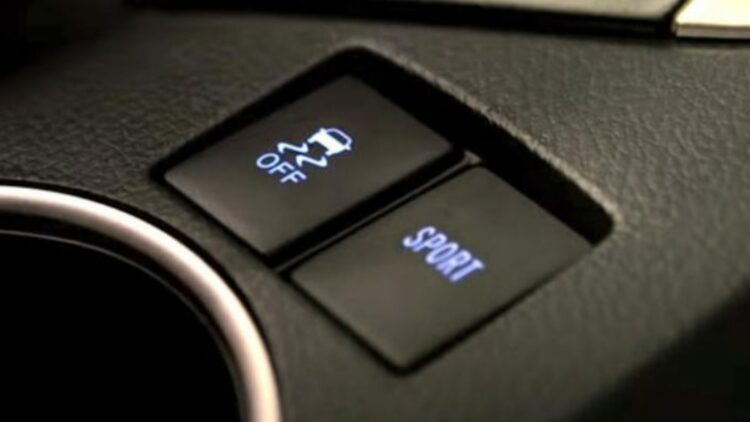
Toyota and Lexus have a reputation for being the most reliable cars on the market, and part of that trust comes from the electronic systems that work in the background without us hardly noticing. And really, have you seen a better car (in general terms) than a Lexus? Well, one of those systems that works in silence so you can brag about your car is the VSC (Vehicle Stability Control), a stability control system that kicks in when the car loses grip, for example in a fast curve, on ice or when avoiding an obstacle.
But surely at some point the VSC light has turned on in the dashboard and you didn’t know why, but wait because not every time it lights up it is a serious warning, so we are going to tell you why this light may turn on to avoid unnecessary worries (or even save you a trip to the shop!)
How VSC works
The VSC acts quite discreetly, applying brake pressure to specific wheels and, if necessary, reducing engine power. All with the goal of keeping the car following the path set by the steering wheel and not ending up skidding or suffering worse damage. It is a system designed to help you right in the most critical moments.
When the light flashes?
If you see the VSC light flashing for a few seconds, relax, it is not a warning sign. On the contrary, it means the system is acting correctly. It usually happens in tight turns taken with some force or when driving on slippery surfaces like ice, mud or sand. In those cases, the car is correcting the path and restoring stability, that is, it is doing its job properly.
When the light stays on
It is another story if the light stays on continuously. There the message changes and it may be that the system has a fault or that you have deactivated it manually with the VSC button (usually located next to the gear lever or on the dashboard). If it is a fault, the recommended thing is to go to the shop and have it checked so you don’t have more problems.
Is it ever advisable to turn off the VSC?
Normally you should always keep it on, because it adds safety to the vehicle. But there are very specific situations where turning it off can help you, like when the car gets stuck in snow, mud or sand. In those cases, the VSC limits wheel spin to prevent slipping, which sometimes keeps the car from getting out of the jam. If you turn it off, the wheels can spin and “shake” the car until it is free. That said, once out, it is best to turn it back on right away.
What to do if the light doesn’t go off
If the VSC light stays on without you having turned it off, the smartest thing is not to ignore it!! It is not a system you can fix on the side of the road, so the right thing is to take it to a mechanic for a diagnosis. The car will keep running, but you will lose that help in case of an emergency, and that could be the difference between a scare and an accident.
Takes care of you without you noticing
An invisible ally that only makes itself known when things get ugly. Seeing the light on the dashboard does not always mean a problem: sometimes it is just the confirmation that the system is working to keep you safe.
Now, if the signal stays on, the recommendation is to take the car to the shop and make sure everything is in order! Trusting in this system is key to enjoying safer and more stable driving, no matter the road conditions. Thank you, Toyota and Lexus!