
Have you ever wondered what happens with bees and wasps when it’s winter? With cold temperatures gardens look empty and the familiar buzzing sound of summer disappears. Do all bees and wasps die? Do they disappear? Well, the answer is that bees and wasps completely change their way of living to survive winter. So, let’s learn more about what these insects do in winter.
How bees and wasps live
To understand what happens in winter, we first need to know there are two big types of bees and wasps: social and solitary insects.
Social species live in groups, with a queen and many workers. In this group we can find honey bees, bumble bees, yellowjackets, paper wasps, and hornets. Then, the solitary insects live alone and don’t depend on a colony, here we can see carpenter bees, mason bees, mud daubers, and cicada killers.
How honey bees survive cold temperatures
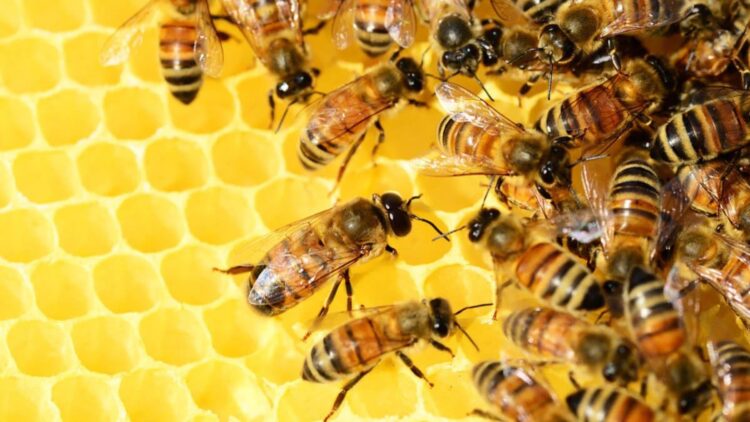
Honey bees have one of the most surprising strategies ever. They don’t hibernate like bears, so when it’s cold the bees gather closely together inside their hive, forming a tight group around their queen. This group is called a cluster.
These bees move their flight muscles to create heat, as if they were shivering. This way they get to maintain a warm temperature in the center of the cluster, even when it’s freezing outside. Bees on the outside of the group slowly rotate inward so that no single bee stays cold for too long.
To stay alive, honey bees rely on the honey they stored during warmer months. They use it as fuel to produce heat. So, as long as the hive has enough food and is healthy, the colony can survive winter storms that would kill many other insects.
bumble bees and solitary bees hide
Bumble bees have colonies that last only one year. When it’s winter, worker bees and the old queen die, only the newly mated queens survive. These queens are hidden underground, among the dry leaves or small cracks on the ground, and they stay there until the weather is warm again.
However, solitary bees use other methods. Some adult bees, like carpenter ones, stay inside tunnels in wood. Others remain in their nests as larvae or pupae, not fully grown yet, waiting quietly for warmer weather.
This is why experts say that fallen leaves, plant stems, and undisturbed soil are not just a mess. They act as tiny winter shelters for bees.
What about wasps?
Social wasps also follow an annual cycle. In spring, a single queen starts a nest, and by summer, the nest can contain hundreds or even thousands of wasps.
When the freezing temperatures arrive, most of the workers die. However, new queens survive because they hide in places like under tree bark, inside logs, or in buildings like sheds and attics. Then, in spring each queen can start a brand-new nest.
In some warmer areas, especially where winters are mild, a few nests may survive longer than expected. These can grow into very large colonies, sometimes called “super nests,” which can be dangerous due to the high number of wasps.
Wasps and bees in winter
Even though most of them hide, on winter sunny days you can see some bees or wasps. Honey bees sometimes leave the hive briefly during sunny weather, and wasps hiding inside walls or attics may wake up if the space becomes warm.
Seeing a few insects does not mean summer has returned. However, if wasps keep appearing indoors during winter, it could mean there is a hidden entry point nearby.
So, next winter when you notice there are no bees or wasps, you won’t have to wonder about it anymore.Now you know they are still there, but hidden, waiting for the perfect moment to leave.