
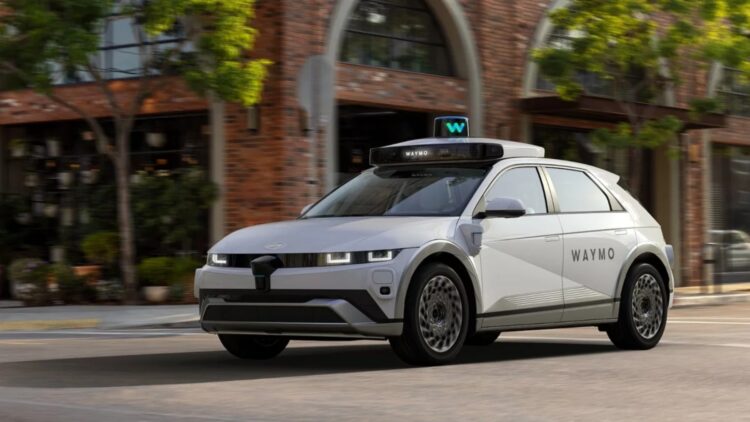
Today, we are going to talk about autonomous cars, in particular Waymo models. You would agree with me that technology advances very fast, even faster than laws, and an incident that happened in California is a great example of this.
Recently, San Bruno police, a city in the Silicon Valley area, tried to fine an autonomous car from the company Waymo. However, the police didn’t know what to do since there was no driver inside the vehicle. So, let’s find out what happened in more detail.
The attempt to fine
Officers had set up a checkpoint to catch drunk drivers and everything was going as normal until a vehicle from Waymo, a company that develops driverless cars, made an illegal U-turn to avoid the checkpoint.
Officers turned their car’s lights on to stop the car which automatically stopped, as it’s programmed for these types of situations. However, when they got closer to the car they saw the car was empty: no driver and no passenger. Therefore, there was nobody to hand the ticket to.
What about robots?
The San Bruno police explained on their Facebook page that they couldn’t issue a fine because the citation books don’t have a box for ‘robot’. They wrote something in a humoristic tone:
“Since there was no human driver, a ticket couldn’t be issued (our citation books don’t have a box for ‘robot’). Hopefully the reprogramming will keep it from making any more illegal moves. It was a first for both officers.”
If a human being had made that turn, that person would have received a $234 fine (plus court fees if they choose to contest it). But, in this case, officers recognized they don’t have any legal authority to issue the ticket, although they admitted that laws are already being updated to make this possible in the future.
Waymo said something about it
The company, owned by Google’s parent company Alphabet, made an official announcement to clarify that their autonomous driving system (called Waymo Driver) is designed to respect traffic rules. Yet, Waymo confirmed that they will investigate what happened and that they are still committed to improving road safety through continuous experience and learning about their vehicles.
Yes to fines, but only for parking
Even though a driverless car can’t receive a traditional traffic fine, it can receive parking fines. For example, if it blocks the cleaning of the roads or stays for too long in a space.
During 2024, Waymo vehicles accumulated $65,065 in parking fines in San Francisco. However, this figure is low compared to the $120 million fines issued in the entire city that same year.
California laws are not ready yet
When California first began issuing licenses for autonomous vehicles, the state gave companies like Waymo an exemption from minor traffic violations. But that rule is about to change.
Last year, the California State Assembly passed Assembly Bill No. 1777, which will make operators of autonomous vehicles legally responsible for moving violations starting on July 1, 2026. This means that if a Waymo car makes an illegal turn in the future, the company could face a fine.
Other states
California is not the first place where something like this has happened. In Phoenix, Arizona, where Waymo has operated since almost 5 years ago, the police have already experienced similar situations.
On June 19 of 2024, the officers caught a Waaymo car that was driving on the wrong side of the road and it didn’t stop at a red traffic light. When the vehicle stopped, the officer talked to a remote operator (someone supervising the car from afar), but no fine was issued in the end. However, police in Arizona have had the right to that since 2018, when local laws were modified to include autonomous vehicles.
Other states of the United States have already passed similar laws or are in the process of doing it. So, this leaves California behind, despite being one of the first places to allow taxis with no driver.